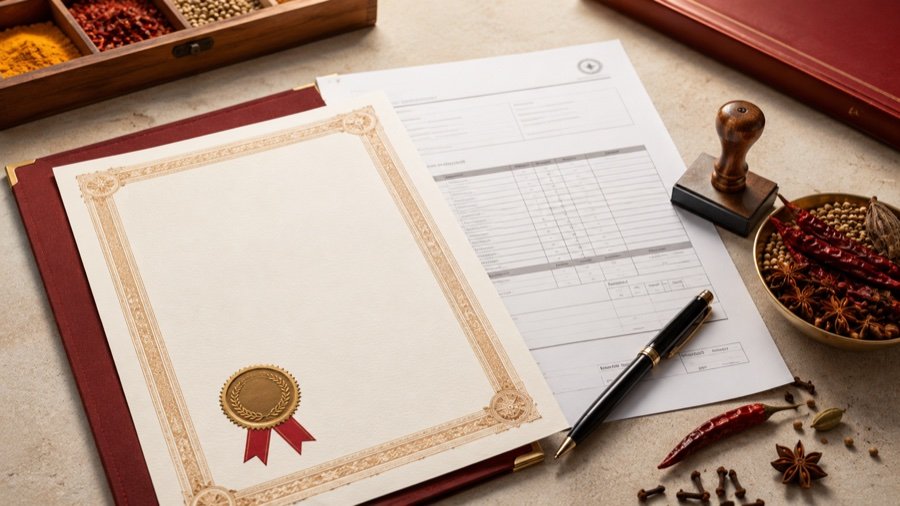
A spec sheet full of abbreviations — ASTA, SHU, admixture percentage, moisture content — can be intimidating if you're new to importing spices. Each of these figures measures something specific, and knowing what they actually mean helps you ask sharper questions and compare quotes from different exporters on equal terms, rather than just comparing price per kilo.
ASTA: colour and cleanliness, not heat
ASTA refers to standards set by the American Spice Trade Association, and the most commonly quoted figure is the ASTA colour value, used mainly for red chilli and paprika. It's a numerical measurement of colour extract intensity, tested using a spectrophotometer — a higher ASTA value means a deeper, more vivid red colour. This matters commercially because colour extract is what many food manufacturers are actually buying when they order chilli powder for products where visual appeal matters as much as heat.
ASTA also publishes cleanliness specifications covering permissible limits for extraneous matter, insect fragments and mould, which is why "ASTA-grade" is sometimes used more broadly to mean cleaned and graded to an export-ready standard, beyond just the colour number.
SHU: heat, measured on the Scoville scale
Scoville Heat Units measure capsaicin concentration — the compound responsible for a chilli's heat. It's an entirely separate measurement from ASTA colour, which is why two chillies can carry a similar ASTA value but very different heat levels. Kashmiri chilli, for example, is prized for a deep red ASTA colour with comparatively mild heat, while other chilli varieties are sourced specifically for high SHU with far less emphasis on colour.
Purity percentage and admixture
Purity is usually expressed as a minimum percentage — the proportion of the shipment that is the actual named product, free from foreign matter, other seed varieties, stems, stones or dust. Admixture is effectively the inverse figure: the maximum tolerable percentage of non-product material. A 98% purity specification with a 2% admixture tolerance is a fairly standard export benchmark for most whole spices, though buyers with stricter downstream processing needs sometimes request 99%.
Common purity and quality parameters worth requesting
- Purity percentage and admixture tolerance for the specific lot
- Moisture content, since it affects both shelf life and shipping weight
- Foreign matter and insect fragment limits
- Aflatoxin and pesticide residue results, especially for regulated markets
Moisture content: the figure that affects everything else
Moisture content is measured as a percentage and directly affects shelf life, mould risk during a long sea voyage, and even effective weight at destination. Most whole spices are specified in a 8-12% moisture range depending on the product; pulses are typically kept lower to reduce the risk of insect activity during storage. A spice with borderline-high moisture might look and smell fine at the port of loading and still develop mould six weeks later in a humid destination warehouse, which is exactly why this figure belongs on every Certificate of Analysis, not just the ones for particularly sensitive products.
Sortex grading: uniformity you can see
Sortex or optical colour sorting is a mechanical process that removes discoloured, broken or foreign material based on colour and shape recognition. "Sortex grade" or "Sortex clean" on a spec sheet generally signals that the lot has passed through this stage, resulting in a visibly more uniform product than sun-dried or hand-sorted stock. It's not a single universal standard — the sorting tolerance itself can vary — but it is a meaningful marker of processing investment.
Reading a spec sheet as a whole, not line by line
No single figure tells the full story. A high ASTA value with poor moisture control, or a high purity percentage with no aflatoxin data, both represent incomplete pictures. The most useful spec sheets present grading, purity and safety parameters together, backed by a Certificate of Analysis for the specific lot being offered rather than a generic product description reused across every quote.
Related Articles
How to Choose a Reliable Spice Exporter in India: A Buyer's Checklist
Read article
Inside India's Spice Belt: Why Gujarat and Rajasthan Dominate Global Cumin and Fennel Supply
Read article