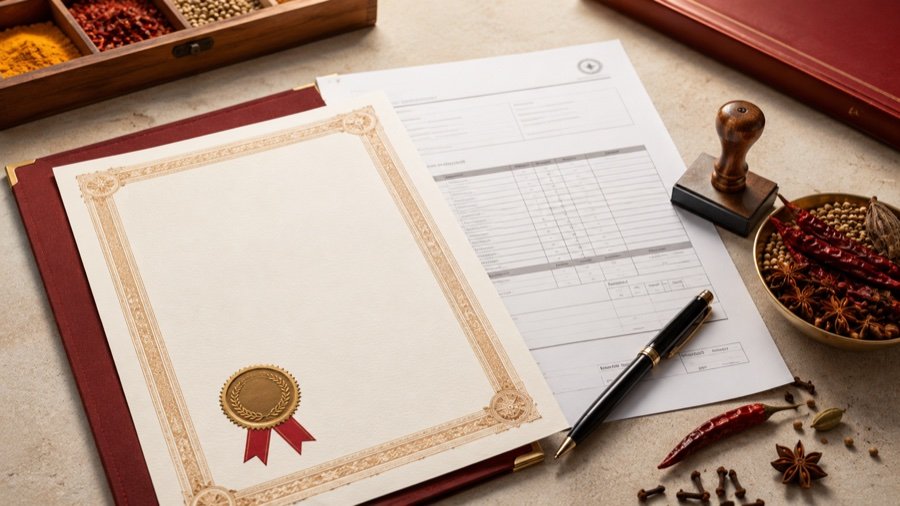
Private labelling — putting your own brand on packaging rather than a generic export label — is one of the most common requests we get from importers building a retail or foodservice brand around sourced spices, pulses or food products. It's also one of the most misunderstood, since the practical constraints (minimum order quantities, artwork lead times, packaging tooling) vary a lot more than most first-time buyers expect.
Minimum order quantities exist for a real reason
Custom packaging — whether printed pouches, labelled jars, or branded cartons — requires a print run or packaging order placed with a converter, and converters set their own minimums that are usually well above what a generic unbranded bag requires. This is why private label MOQs are typically higher than standard bulk order minimums: the exporter isn't marking up arbitrarily, they're passing through a real packaging-side minimum that exists regardless of who's placing the order.
Artwork approval takes longer than people expect
Getting packaging artwork right — print colour matching, barcode placement, regulatory label requirements for the destination country, language and allergen declarations — usually takes several rounds of proofing between the buyer, the exporter and the packaging converter. Building in two to three weeks for artwork approval alone, separate from production and shipping time, avoids the most common private label timeline mistake: assuming the printed packaging can be ready as fast as an unbranded order.
What to prepare before requesting a private label quote
- Print-ready artwork files, or a clear brief if you need design support
- Destination country's mandatory label requirements (ingredients, allergens, net weight declarations)
- Target packaging format — pouch, jar, carton and preferred size
- Realistic order volume, since this determines whether MOQ applies as quoted or needs a hybrid approach
Regulatory labelling isn't optional, even on a custom design
Private label packaging still has to meet the destination market's food labelling regulations — nutritional information, allergen statements, country of origin, net weight in the required units. A striking brand design doesn't override a compliance requirement, and customs holds over incomplete labelling are a common and entirely avoidable cause of delayed shipments. A supplier experienced in private label export should flag missing regulatory elements during the artwork review, not leave the importer to discover them at customs.
Packaging material and format still affect shelf life
Custom branding doesn't change the underlying packaging science — a private label pouch still needs the same moisture barrier and seal integrity considerations as any export packaging. It's worth confirming that the packaging format chosen for branding purposes doesn't compromise the protection the product needs during shipping and storage, particularly for moisture-sensitive spices and pulses.
Building a repeat private label relationship
Once artwork is approved and the first run is complete, reorders are typically much faster since the packaging specification and print files are already finalised. This is where private labelling pays off over time: the upfront investment in MOQ and artwork approval amortises across every subsequent order, making a private label supply chain increasingly efficient the longer the relationship runs.
Related Articles
Packing for the Ocean: How Bulk Spices and Pulses Survive Long-Distance Shipping
Read article
How to Choose a Reliable Spice Exporter in India: A Buyer's Checklist
Read article